ServicesBattery Storage
Battery Storage in The Colony, TX
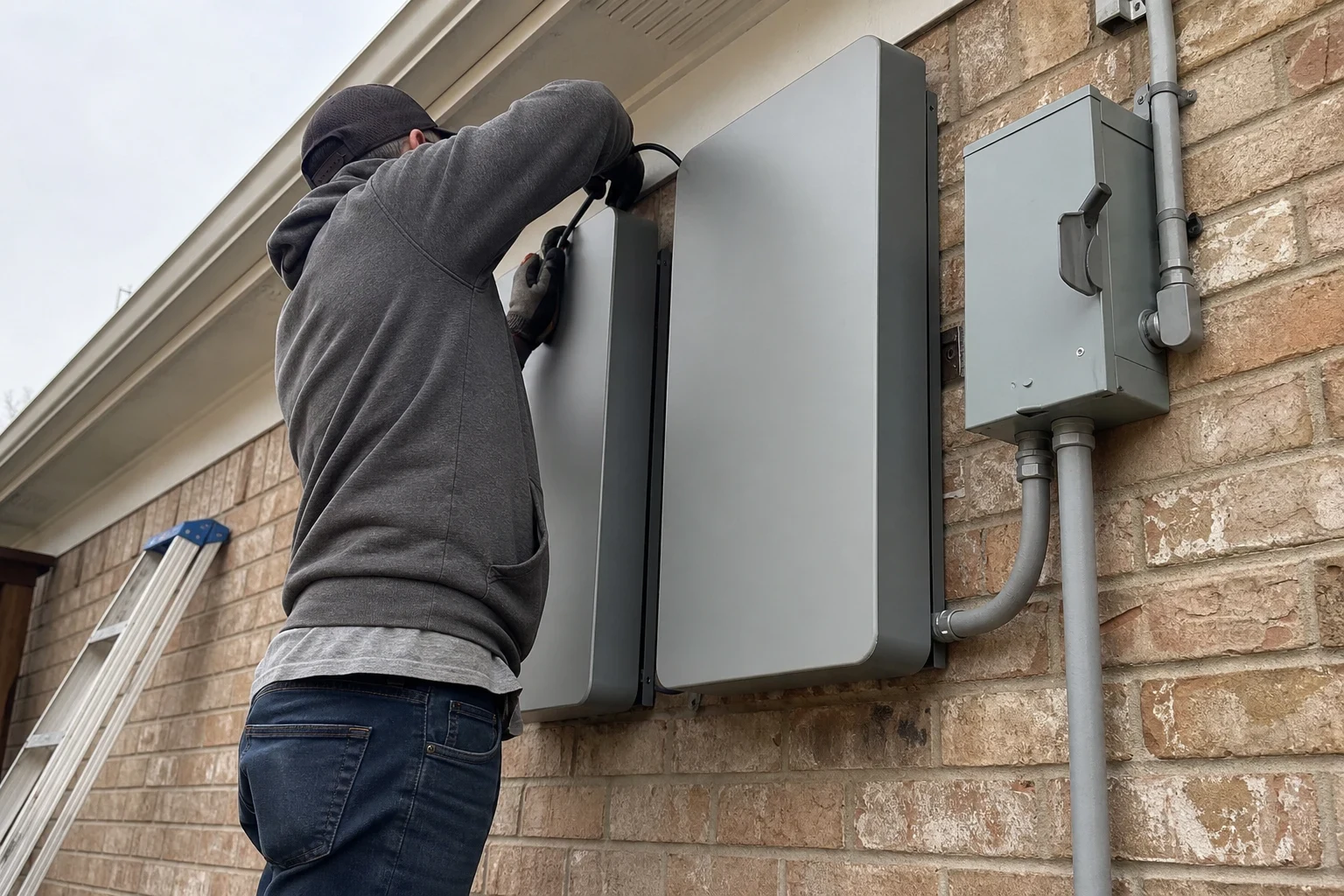
We add home batteries to new and existing solar systems, sized from what your home actually uses and what you want running when the grid goes down. Before we suggest any equipment, we look at your bills, your electrical panel and your goals so the system fits the first time.
Stored solar for evenings and outages
Your panels make most of their power around midday, while your home often needs the most after sunset. Storage holds that daytime surplus so you can draw on it later, keep essentials running through a grid outage, or avoid buying power at its most expensive hours. Even so, storage is not right for every home. If your electricity plan pays a fair rate for exported solar and outages rarely affect you, the numbers may favor waiting.
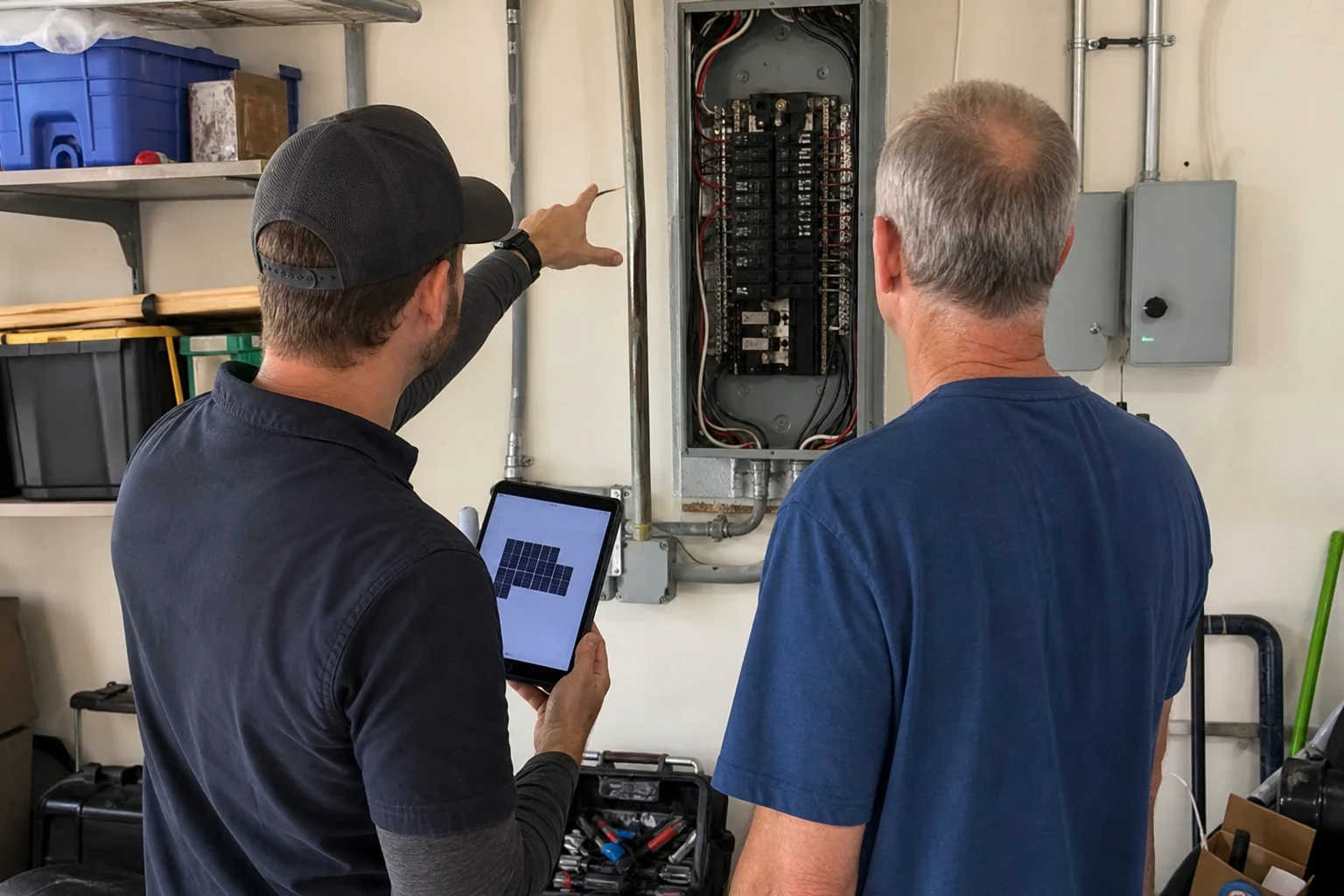
That is why we start with your situation rather than a product. We read a year of usage, check how your solar is wired today, open the main panel to see its rating and spare space, and ask which circuits matter to you. A battery that is too small runs flat before midnight. One that is too large costs money it never earns back.
North Texas summers push evening demand high, and winter storms can take the grid down for long stretches, so we plan for both and choose a location where heat will not shorten the battery's life.
What battery storage work includes
- 01
Load and usage review
We go through your utility history and talk through what you want backed up: refrigerator, lights, internet, a garage door, perhaps one air conditioner. From that we calculate the energy you need stored and the power the battery must deliver at once, since motors and compressors draw a surge on startup.
- 02
Panel and wiring assessment
We check your main service panel, breaker space and existing solar inverter. Some homes need a backup subpanel so selected circuits stay on during an outage; others suit a whole-home setup. You see photos of what we found.
- 03
Equipment matched to your system
Batteries connect as AC-coupled or DC-coupled depending on your inverter. We explain which approach suits your solar and why, instead of defaulting to one brand.
- 04
Careful placement and mounting
Lithium batteries hold capacity longer when kept out of direct sun and extreme heat. We pick a wall with room for service, mount to solid framing or a pad, and run conduit neatly along the house so the finished work looks deliberate.
- 05
Permits, interconnection and commissioning
We pull the city permit, prepare the paperwork your utility requires and schedule the inspection. After approval we commission the system, test a simulated outage and set the operating mode with you.
Questions about Battery Storage?
Call(972) 430-5839Signs a battery may be worth a closer look
Most of your solar goes back to the grid
If your panels produce far more at midday than you use, and your plan credits exports at a low rate, storing that energy for evening use recovers value you are currently giving away.
Outages leave you without essentials
When the grid drops, a standard grid-tied solar system shuts off too, for line worker safety. A battery with the right transfer equipment keeps your chosen circuits running.
Someone at home depends on power
Medical equipment, a home office or medication that needs refrigeration changes how much backup time matters. We size for that need first.
Your evenings carry the heaviest load
Late afternoon and evening, when cooling and cooking overlap, is often when your home draws the most and your panels produce the least. Stored solar can cover part of that window.
You are planning solar and want backup later
Planning ahead keeps options open. We can set up a new solar panel installation so a battery can be added later without rewiring.
How a battery project runs
- 1
A conversation by phone
You tell us about your home, your solar if you have it, and what prompted the call. We schedule a visit and let you know which bills to have ready.
- 2
Site visit and diagnosis
We inspect the panel, inverter, wall space and wiring route, photographing each. Then we model your usage against realistic battery options.
- 3
Written estimate
You receive a line-item estimate covering the battery, any subpanel or electrical work, permits and labor, along with the reasoning behind the size we recommend.
- 4
Installation day
Most installs take a single day. Power is off for part of it while we connect to the panel, and we tell you when in advance. We protect walkways and plantings and clean up before we leave.
- 5
Inspection and handoff
Once the city inspection and utility approval are complete, we switch the system on, walk you through the app and settings, and show you exactly how backup mode behaves.
What shapes the cost of battery storage
Battery pricing depends as much on your home as on the battery itself. We give you a written estimate after the site visit, and every line explains what it covers. These are the things that tend to move the total.
- Storage capacity and output
- More stored kilowatt-hours and higher continuous output cost more. Backing up a central air conditioner takes a larger system than lights and a refrigerator.
- Your existing solar and inverter
- Some inverters accept a battery directly; others need an added inverter or an AC-coupled unit. We confirm which on the visit.
- Electrical panel condition
- An older or full panel may need a backup subpanel, new breakers or a service upgrade before a battery can be connected safely.
- Location and wiring distance
- A battery mounted near the main panel needs less conduit and labor than one placed farther away to keep it shaded.
- Permit and utility requirements
- Inspection steps and interconnection paperwork add time and cost, and they are listed separately so nothing appears later as a surprise.
Battery storage questions
Will a battery power my whole house during an outage?
It can, depending on the size of the system and what your home draws. Many homeowners choose a set of essential circuits instead, which stretches stored energy much further. We show you how long each option should last based on your actual usage.
Can I add a battery to the solar I already have?
Usually, yes. The real question is how. We check your inverter model and panel first, then recommend AC-coupled or DC-coupled storage. If the system has a fault worth fixing first, we tell you, and our solar repair work can handle it before the battery goes in.
Where will the battery go?
Most go on an exterior wall or in the garage, close to the main panel. We avoid west-facing walls that bake in afternoon sun, keep the required clearances, and agree on the spot with you before installation day.
Does a battery need maintenance?
Very little. Lithium batteries manage themselves through their own software. We suggest checking the app now and then, keeping the area around the unit clear, and keeping your panels producing well, which is where panel cleaning helps once dust and pollen build up.
How long does the whole project take?
The installation itself is usually one day. Permitting and utility approval take longer and vary from case to case. We keep you informed at each stage and tell you plainly where things stand.
Find out what size battery your home needs
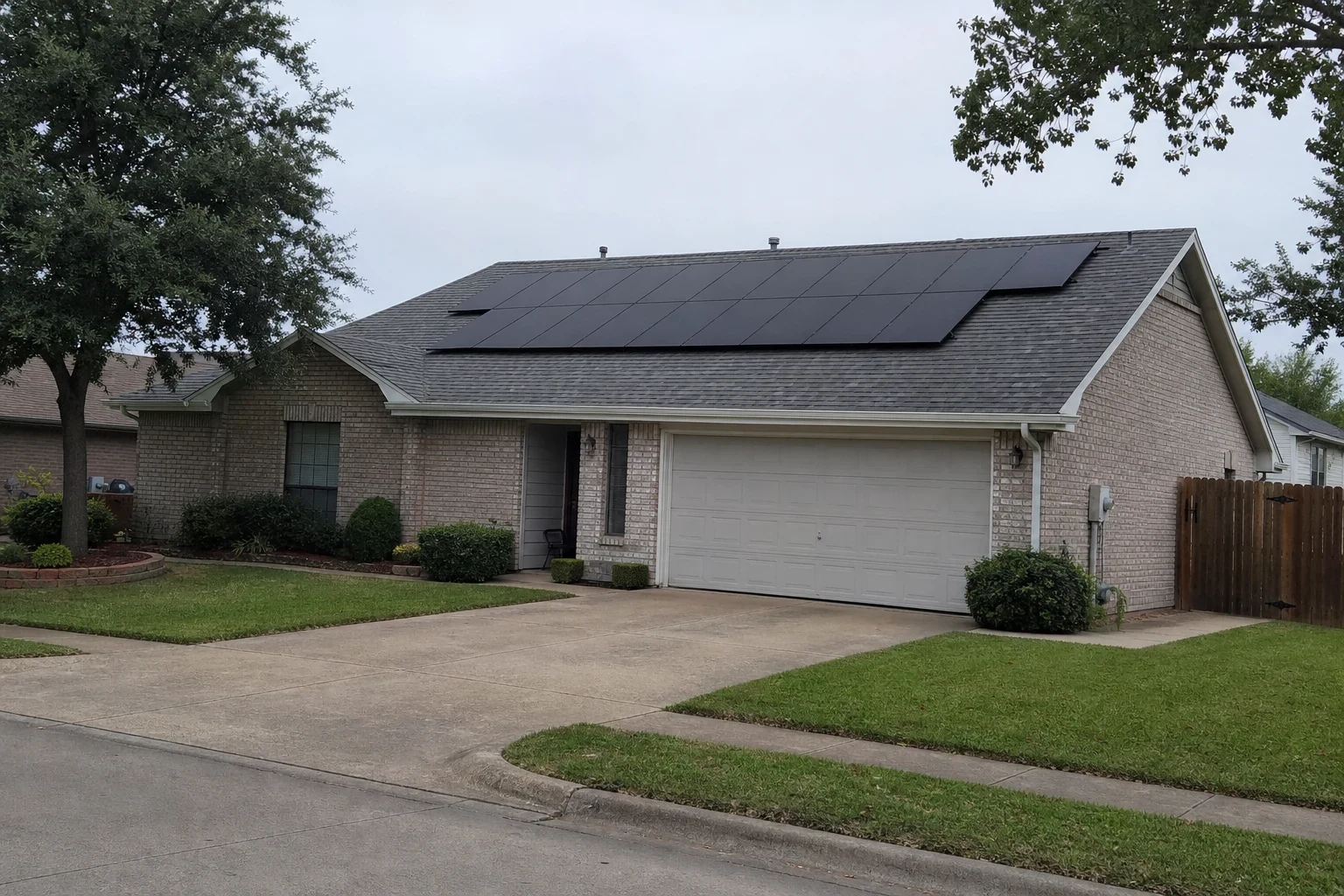
Tell us about your home and what you want kept on when the power goes out. We will arrange a visit and give you a clear, written answer.