ServicesSolar Panel Installation
Solar Panel Installation in The Colony
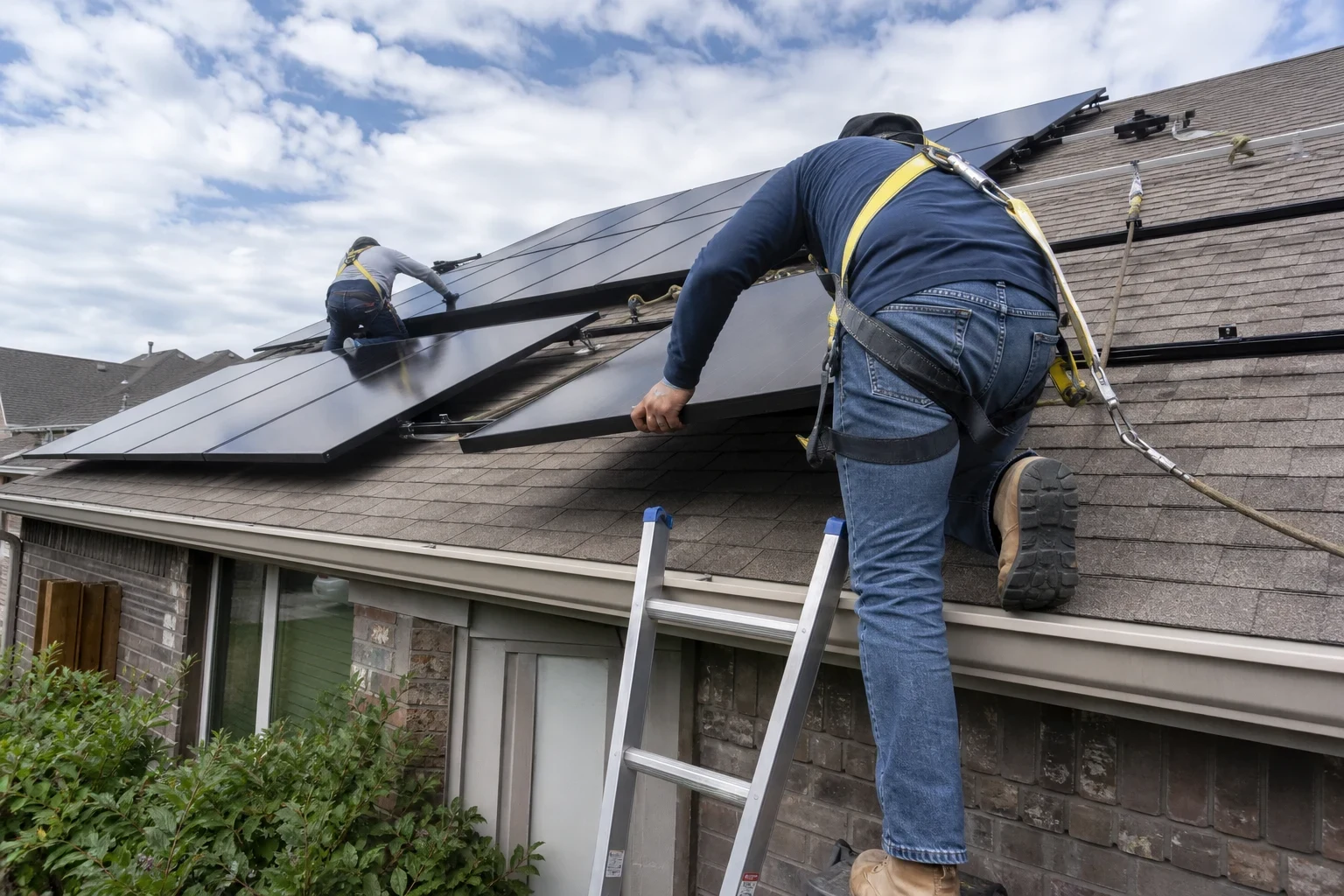
We start with your electric bills, your roof and your service panel, then design a system that fits how your home actually uses power. You get a clear plan, a careful install and wiring that looks as considered as the panels themselves.
A system planned from the facts, not a template
A good solar installation begins well before anyone climbs a ladder. We read twelve months of usage, measure each roof plane, note where trees and chimneys cast shade through the day, and open your main electrical panel to see what it can safely accept. That work tells us how many panels make sense, where they belong and whether anything needs attention first.
Many disappointing systems trace back to a guess made at this stage: a panel count picked from square footage, an array placed on a shaded face, or a service panel that was never checked. We would rather find those problems on paper than after the system is on your roof.
If storage is part of your plans, we can design for Battery Storage now or leave room to add it later. On sloped roofs, our Roof-Mounted Solar page covers attachment and flashing in more detail.
What the installation includes
- 01
A year of bills reviewed
We study twelve months of usage so the system handles summer peaks without being too large for the milder months.
- 02
Roof and shade check
We look at roof age, decking and orientation, and chart shade through the seasons. If the shingles seem to have only a few good years left, we tell you before designing anything, since removing panels later for a new roof adds avoidable cost.
- 03
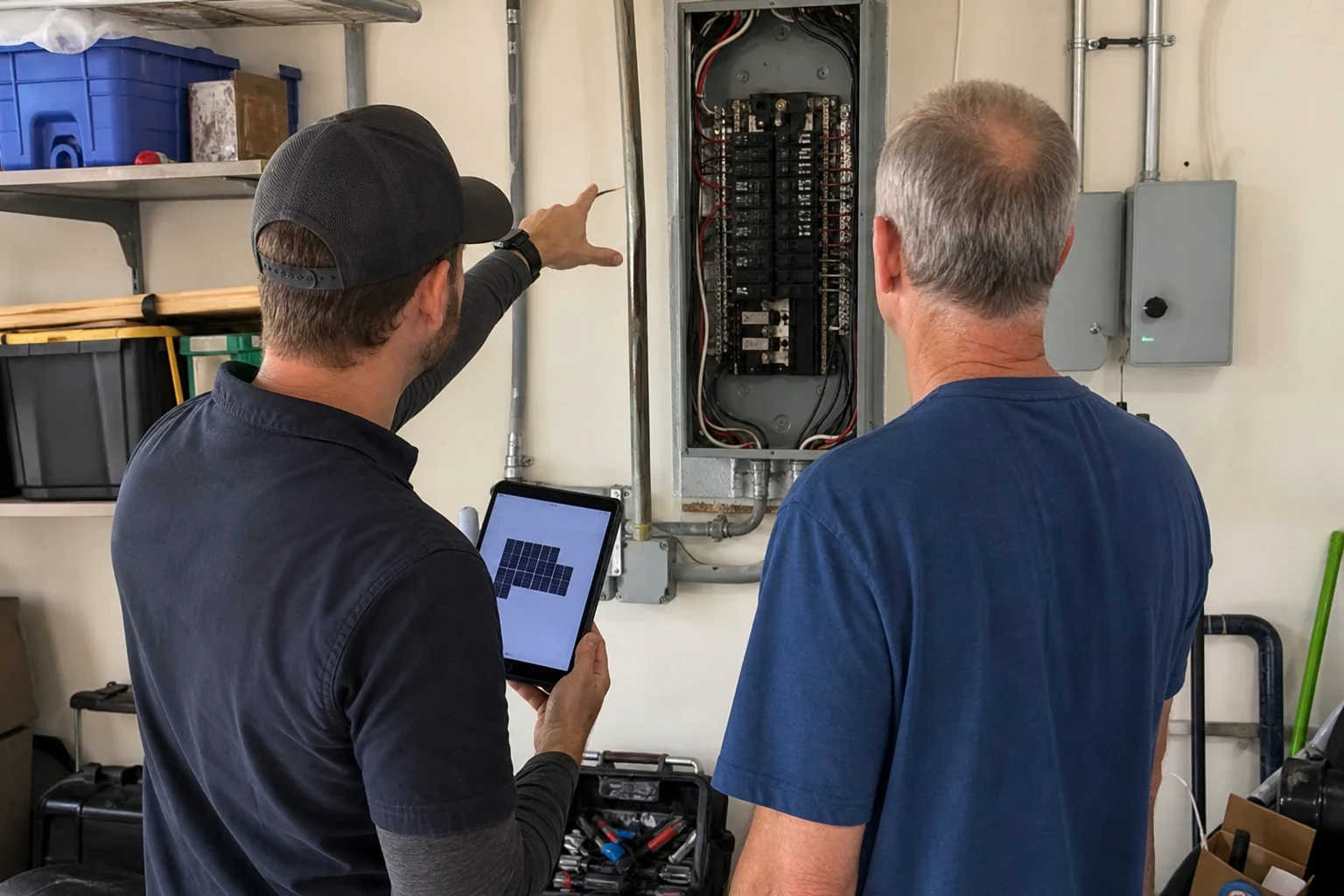
Main panel review
We verify your main panel's rating and open space. If it needs an upgrade or another way to connect, that shows as a separate line on the estimate.
- 04
Itemized written estimate
Equipment, labor, electrical work and permit fees each get their own line, so you see where every dollar goes.
- 05
Permits and utility paperwork
We get the building permit, schedule the city inspection and complete the utility's interconnection forms on your behalf.
- 06
Tidy finish and walkthrough
We run conduit cleanly, clear debris from the yard and gutters, and show you how to use your monitoring app before leaving.
Questions about Solar Panel Installation?
Call(972) 430-5839When installing solar is the right call
Summer bills climb every year
Long North Texas cooling seasons push usage high from May through September. Solar produces most when that demand is highest.
Your roof has good years left
Panels are best installed on a roof with plenty of life remaining, so they will not need to come off soon.
You have open south or west roof space
Unshaded faces in those directions usually give the strongest production. East-facing planes can still work well with the right layout.
You plan to stay a while
Solar returns its value over years. If you expect to stay in your home, the numbers tend to make more sense.
You want room to add storage
Designing for a battery from the start avoids rework later, even if you install it in a second phase.
How a solar installation runs
- 1
Visit and measurements
We look over the roof, attic access, main panel and meter spot, photographing all of it. You hear plainly whether your home suits solar.
- 2
Layout and pricing
We draw the array, size the inverter and wiring, and go through each line of the written estimate with you.
- 3
Permits and sign-offs
We put together the plans the city reviews for the permit and handle the utility's interconnection request. If your HOA reviews exterior work, we supply the drawings it wants.
- 4
The install
Most home systems take one to three days to install. We guard your landscaping, seal each roof attachment and tidy the work area at the close of every day.
- 5
Approval and switch-on
After the inspector passes the work and the utility gives permission to operate, we turn the system on, confirm every panel appears in monitoring and show you how it all works.
What shapes the cost of your system
Two homes on the same street can need very different systems. Price follows the size of the system and the conditions we find during the assessment. Every item appears on your written estimate before work begins.
- System size
- The number of panels follows your usage and available roof area. A larger array costs more but produces more.
- Equipment choices
- Panel efficiency, string inverters versus microinverters, and monitoring options each change the total.
- Roof layout and access
- Steep pitches, multiple small planes or two-story eaves add labor and safety setup.
- Electrical upgrades
- When your main panel is near capacity or showing its age, it may need replacing before it can take on solar. In some homes we connect on the supply side of the meter instead, which changes the scope.
- Permits and add-ons
- Permit fees, critter guards and battery-ready wiring are listed as separate lines so you can decide on each.
Solar installation questions
How do you decide how many panels I need?
We start from a year of your electric bills, not from the size of your house. We then match that usage to the roof space that actually gets good sun. The result is a panel count you can check against your own numbers.
Will panels damage my roof?
Each attachment is fastened into the rafters and flashed and sealed against water. Before we design anything, we check the roof's condition so we are not mounting on decking that is already failing. If we see a problem, we show you photos.
Can my HOA stop me from going solar?
Texas law limits how far most HOAs can go in prohibiting solar, though many still review placement. We prepare clean drawings for that review and can often adjust the layout to satisfy their guidelines.
What happens if it hails?
Quality panels are tested against impact from hail. Storms can still cause damage, so we explain how panels relate to your homeowner's policy and keep install records and photos you can share with your insurer.
How long until the system is producing?
Installation itself is usually a few days. The longer stretch is permitting, inspection and utility approval, and we keep you updated at each stage until the system is switched on.
Start with an honest look at your home
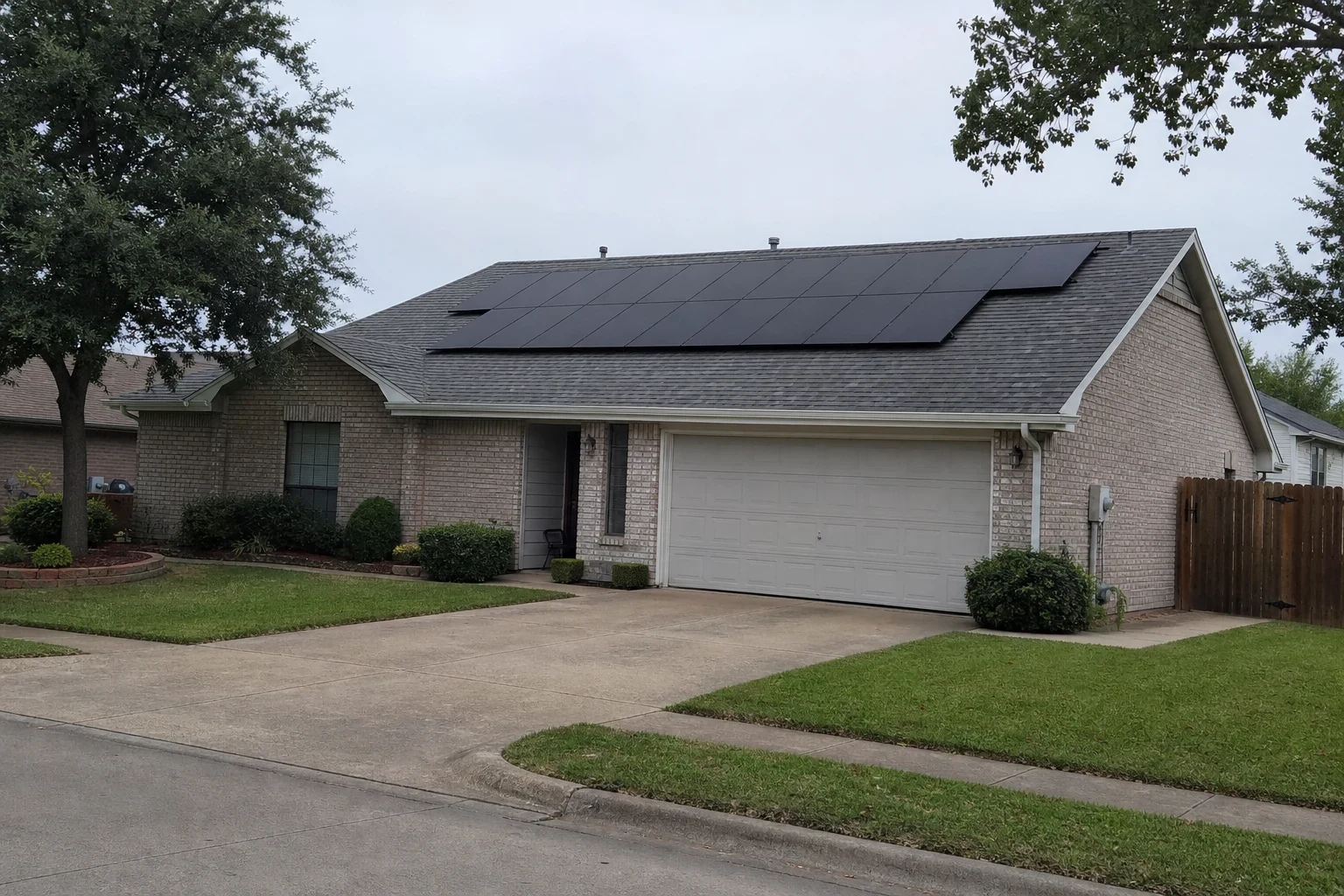
Tell us about your bills and your roof, and we will explain what a well-planned system could look like. We serve The Colony and nearby towns including Frisco, Little Elm and Lewisville.