ServicesPanel Cleaning
Solar Panel Cleaning in The Colony
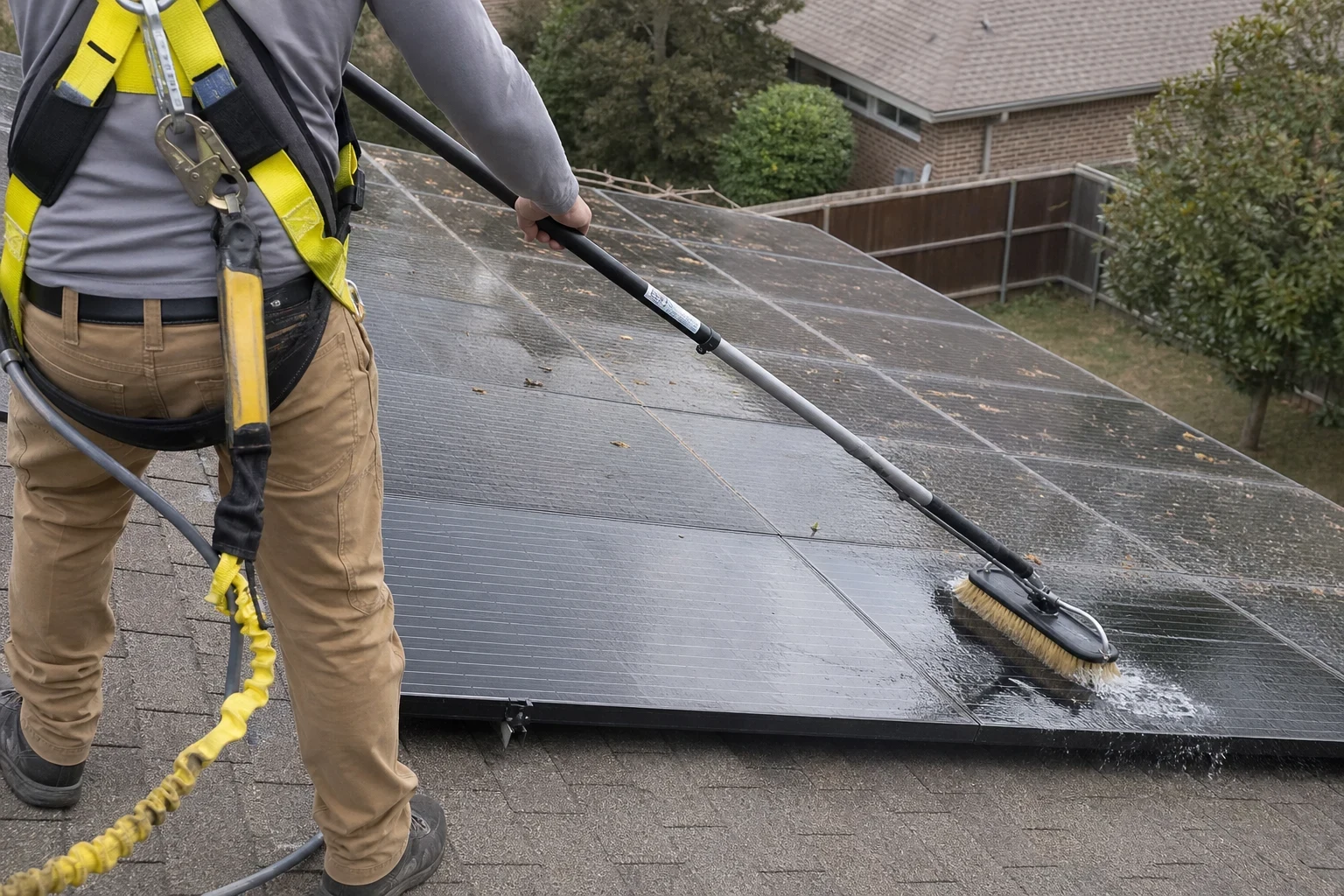
We clean your panels by hand with purified water and soft brushes, then compare your production before and after. If output was low for a reason dirt cannot explain, you hear about it from us the same visit, not months later.
Cleaning that starts with a question
A film of dust, pollen and bird droppings can pull a panel's output down, and North Texas supplies plenty of all three. Spring pollen and dry summer wind leave a gray layer that light rain only moves around. A careful cleaning restores the glass to what the manufacturer intended.
Not every dip in production is dirt, though. A failing optimizer, a tripped breaker or shading from a tree that has grown over a few seasons can look the same on your monitoring app. So before we touch a brush, we look at your system's numbers and the panels themselves. That way you pay for cleaning when cleaning is what your home needs, and you learn early if something else deserves attention.
What a cleaning visit includes
A look at your production data
We review your monitoring history with you, if you have it, so we know what normal looks like for your array. A sudden drop on one string points somewhere very different than a slow fade across every panel.
Purified water, no harsh soap
Tap water in the area is hard and leaves mineral spots that bake onto glass in the sun. We rinse with deionized water that dries clear, and we skip detergents that can strip anti-reflective coatings.
Soft bristles and a gentle rinse
A forceful jet of water can drive moisture under the frame gaskets and toward the electrical connections on the back of each module. Our approach is slower and kinder to the equipment: soft-bristle brushes on extension poles, followed by a light, low-flow rinse that lifts the dirt away.
A close visual inspection
With the glass clean, problems are easier to see. We look for cracked or chipped glass, discoloration, loose or chafed wiring, and nests or debris tucked under the array.
Photos and a plain summary
You get photos of anything we noticed and a short explanation of what it means. If it calls for solar repair, we say so and explain why, without pressure.
Signs your panels may need cleaning
A visible gray film
If you can see a dull haze from the yard, the panels are losing light. Pollen season and long dry spells are the usual causes.
Bird droppings that stay put
Droppings block light on whole cells and do not wash off in rain. Even a few spots can drag down a panel's output more than their size suggests.
Production slipping a little each month
A gradual, even decline across all panels is the classic pattern of buildup. A sharp drop on part of the system usually means something else, and we will check for that.
Water spots or a dirty edge line
Dirt that collects along the lower frame, where rain drains, can shade the bottom row of cells. Mineral rings from sprinklers or past rinsing are another sign.
It has simply been a while
Many homeowners have never had their panels cleaned. If you cannot remember the last time, a visit gives you a clean baseline to measure against.
How the day goes
- 1
We talk on the phone first
You tell us about your system, your roof's pitch and height, and anything you have noticed in your app. We set a time, often early morning, when the glass is cool and the water will not flash dry.
- 2
Check before we clean
On arrival we look over your production numbers and walk the array. We note anything that looks out of place so we can tell you whether cleaning alone will help.
- 3
Careful hand cleaning
We brush and rinse each panel with purified water, working from the top down. We step around your landscaping, keep hoses off flower beds and leave the area as we found it.
- 4
Compare and report
Once the panels are dry and in full sun, we look at output again. You get our findings, photos and an honest recommendation, even if the answer is that nothing more is needed.
What shapes the cost of cleaning
Panel cleaning is priced by the job, and we explain the reasons for the number before any work starts. You get your quote by phone once we know a few details about your array and your home.
- Number of panels
- More panels mean more time on the brush and more water. Larger arrays are the biggest single factor.
- Roof height and pitch
- A single-story roof with a gentle slope is quicker and simpler to reach safely. Two-story homes and steep pitches need more setup and more care.
- How much buildup there is
- A light spring dusting rinses off easily. Years of baked-on film, heavy droppings or mineral spots take longer to remove without harming the glass.
- What we find along the way
- If the inspection turns up damage, we explain it and what a repair would involve. Any extra work is a separate conversation you decide on.
Questions about cleaning your panels
Something not covered here? (972) 430-5839
Doesn't rain clean the panels on its own?
Rain does a little, but it seldom removes pollen film, droppings or dry-season dust. More often it drags dirt down to the bottom edge. After a light shower dries, a dusty panel can look dirtier than before.
How often do my panels need a cleaning?
Once or twice a year suits many local homes, usually after spring pollen and again late in summer. Houses near open fields, building sites or lots of trees may need more. Your production numbers are the best guide, and we can help you interpret them.
Can I just use a garden hose myself?
Rinsing gently from the ground is fine if the hose reaches. Please avoid getting on the roof, power washing or scrubbing with household cleaners, since they can harm coatings, seals or you. Hard tap water may also leave spots.
Could cleaning void my panel warranty?
Makers usually expect panels to be kept clean, and many say how. Their main worries are abrasive tools, strong chemicals and high-pressure water. We use purified water and soft brushes, in line with what most manufacturers publish.
What if output stays low after the cleaning?
That means something else is behind the drop, which is useful to learn. We tell you what we noticed, such as a shaded or damaged panel or a wiring fault, and explain what a solar repair would take. Whether to go further is your call.
Find out what your panels need
Tell us about your system and what you have noticed. We will talk it through, explain whether cleaning is likely to help and set a time that suits your home.