ServicesSolar Repair
Solar Repair in The Colony
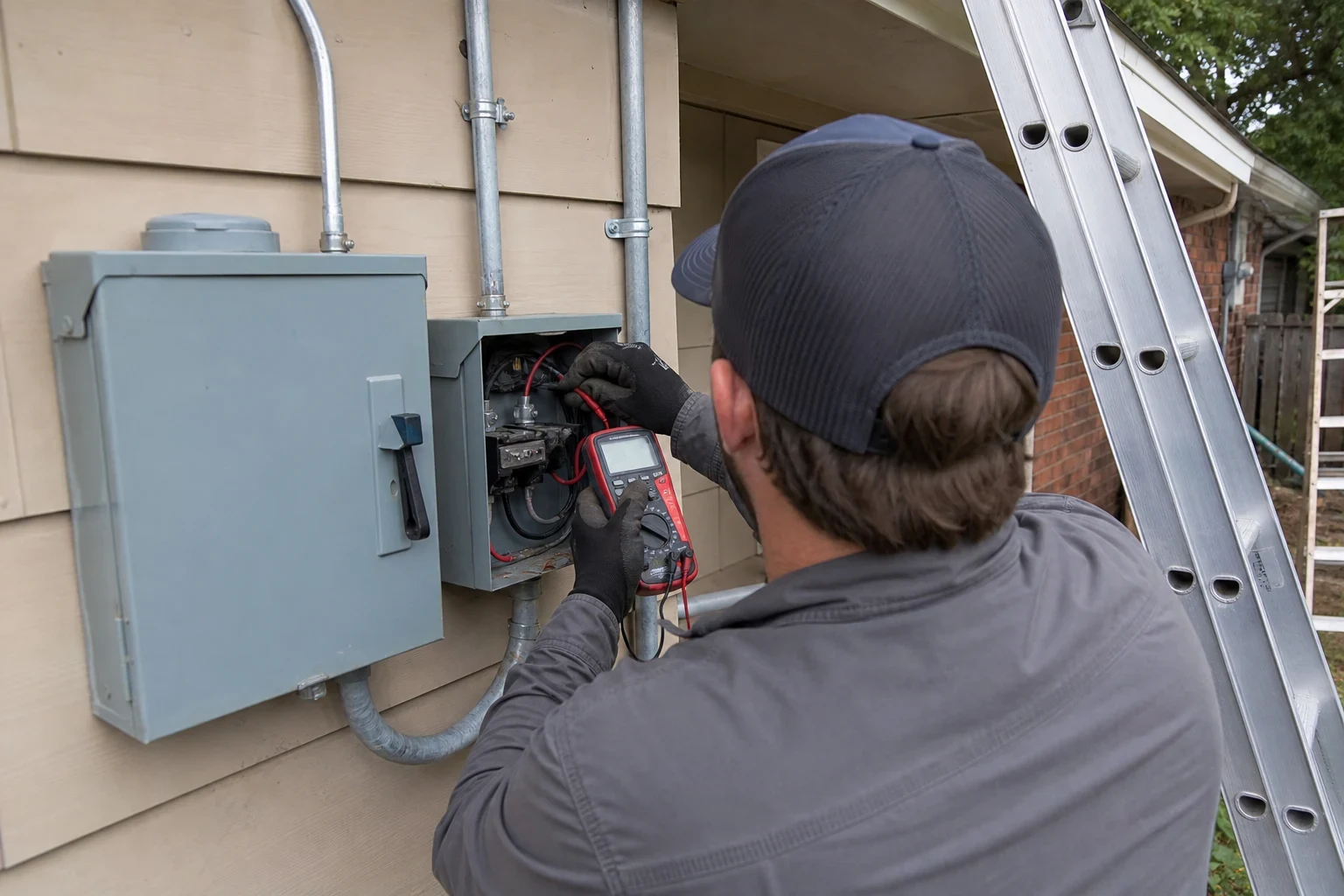
When your system stops producing the way it should, we find out why before anything gets replaced. We test the panels, wiring and inverter, show you what we found, and repair the part that is actually at fault.
Repair that starts with the right answer
Most solar problems show up the same way: a lower number in your monitoring app, a warning light on the inverter, or a bill that crept back up. The cause behind that symptom can be very different. A failed optimizer, a loose connector, a tripped breaker and a cracked cell can all look alike from the ground.
So we diagnose before we quote. We read your production history, test each string, and look at the hardware itself. You get a clear account of what failed and why, then a repair aimed at that one fault. That way you are not paying for parts that were never the problem.
Systems from other installers get the same careful attention as our own. And if the real issue turns out to be a film of dust and pollen rather than a fault, you will hear that plainly from us, because panel cleaning is the simpler and less costly fix.
What a solar repair visit covers
- 01
Monitoring and production review
We compare what your system has produced against what it should produce for its size and orientation. Patterns in the data often point straight at a single string or device.
- 02
String and electrical testing
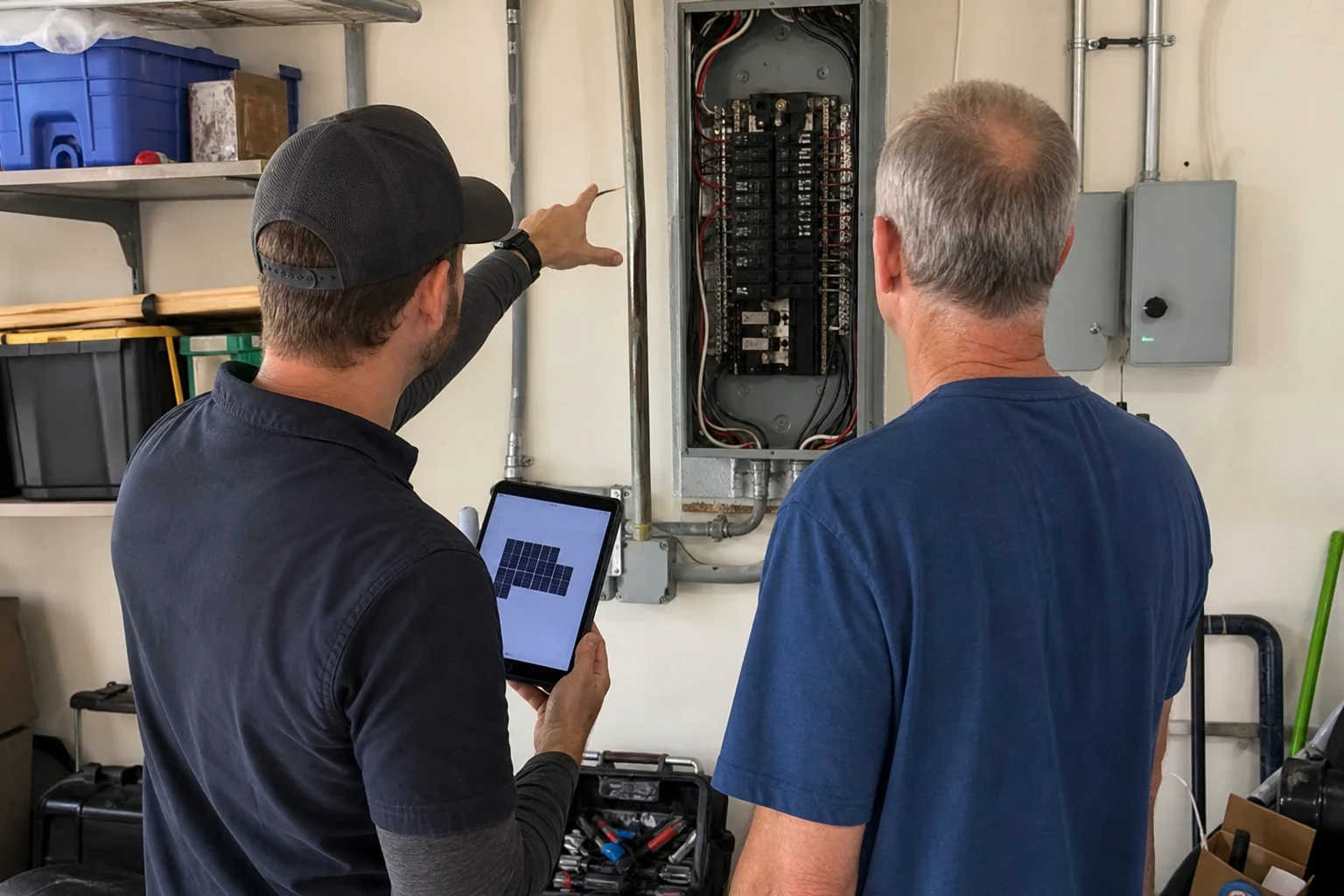
We measure voltage and current on each string and check for ground faults. This separates a panel problem from a wiring or inverter problem without guesswork.
- 03
Inverter and optimizer diagnostics
We read error codes, check firmware and communication, and test microinverters or optimizers that have gone quiet. Many faults that look serious turn out to be a reset, a setting or a single failed unit.
- 04
Wiring, connectors and conduit
We inspect connectors under the array for heat damage, corrosion and looseness, and check conduit runs and junction boxes. Animal-chewed wire gets traced and replaced properly.
- 05
Panels and racking
We look for cracked glass, browning, hot spots and loose clamps or rails. Damaged modules are replaced with a compatible match where one is available.
Questions about Solar Repair?
Call(972) 430-5839Signs your system needs a repair visit
Production has dropped
A steady decline, or a sudden fall on clear days, usually means part of the array has stopped contributing. Dirt causes some loss, but a sharp drop points to an electrical fault.
Warning lights or error codes
A red or amber light on the inverter, or a fault message in the app, is the system telling you something specific. Note the code if you can; it helps us arrive prepared.
Monitoring has gone offline
Sometimes this is only a Wi-Fi change. Other times the gateway or inverter has failed, and the system may have stopped producing without you knowing.
Damage after a storm
North Texas hail and spring wind can crack glass, loosen clamps or tear wiring. If you see debris or chips on the panels, have the array checked before small damage spreads.
Nesting or chewed wire
Birds and squirrels like the shade under panels. Their nests trap heat and their teeth damage wiring, which can cause faults and becomes a safety concern.
A breaker that keeps tripping
Repeated trips on the solar breaker mean something in the circuit is wrong. Leave it off and give us a ring rather than resetting it again and again.
How a repair visit runs
- 1
Start with the symptom
On the phone, describe what has changed and, if it is handy, the inverter brand and any code on its screen. From there we agree on a visit time that fits your week.
- 2
On-site diagnosis
We start at the inverter and electrical panel, review the monitoring data, then test the strings and inspect the array itself. We work carefully around your roof and leave the work area as we found it.
- 3
Findings before any work
Nothing gets replaced until you understand the cause. We walk you through the pictures taken during testing and explain the fault in everyday language. The price comes on paper, each part and the labor on its own line, along with our straight opinion on whether fixing it is worthwhile.
- 4
The repair
Once you approve, we replace or correct the faulty part. If a component has to be ordered, we tell you the expected wait and make the system safe in the meantime.
- 5
Verified output
After the repair we test again and confirm production in your monitoring app before we leave, so you can see the fix working.
What shapes the cost of a solar repair
The price depends mostly on what failed and how hard it is to reach. A reset or a reconnected cable is a small job, while replacing a central inverter is a larger one. We quote only after we know the cause, and the estimate lists each part and the labor separately.
- The failed component
- A connector, an optimizer, a panel and an inverter each carry very different parts costs. Diagnosis tells us which one it is.
- Access to the fault
- A steep roof or a fault in the middle of the array means removing panels to reach it. That adds labor compared with a problem at the inverter on the wall.
- Manufacturer coverage
- Many panels and inverters carry their own manufacturer warranty on the equipment. When a part qualifies, we help you with the claim paperwork, which can lower what you pay.
- Part availability
- Older systems sometimes use models that are no longer made. Finding a compatible replacement can take extra time and affect the cost.
Common questions about fixing a solar system
Do you work on panels another installer put in?
We do. Most common panel, inverter and optimizer brands are familiar to us no matter who mounted them on your home. Plenty of homeowners reach out after their original installer has closed or stopped answering.
How do I know whether to repair or replace?
It depends on the age of the system and what failed. A single bad component on a healthy array is almost always worth repairing. If several parts are failing on an older system, we will lay out both options honestly, and we can talk through solar panel installation if a new system is the better path.
Will my equipment warranty cover the repair?
It may cover the part itself if the failure falls within the manufacturer's terms. Labor coverage varies by manufacturer and installer. We check the serial numbers and dates, tell you what likely applies, and handle the claim submission with you.
Can my monitoring app tell me what is wrong?
It can show that something is wrong and sometimes which panel or string is affected. It rarely shows the cause. That is where testing on site comes in.
My panels were hit by hail. Should I call my insurer or you first?
Having us inspect first gives you photos and a clear list of damage to share with your insurer. We explain what we found and provide documentation, but the adjuster makes the coverage decision.
Is it safe to keep my system running with a fault?
For a simple production drop, usually yes until we arrive. If you see a burning smell, scorch marks, or a breaker that keeps tripping, switch the system off at the disconnect and leave it off until we inspect it.
Find out what is really wrong with your system
Tell us what your inverter or monitoring app is showing. We will arrange a visit, trace the fault to its cause, and walk you through the fix before any work begins.